
A software demo can make a messy operation look straightforward. Someone clicks a button, a record moves and a dashboard updates. The difficult part sits outside the demo: deciding what should happen, who owns it and what happens when the information is incomplete.
Before choosing a tool, choose one piece of work that matters. An order reaching production. A customer receiving a quote. An invoice reaching the person who can approve it. Give that workflow a clear start and a clear finish.
Watch a real example
Ask the people doing the work to walk through a recent item. Use the actual email, spreadsheet and document, with sensitive details removed where needed. Ask what happened next rather than what normally happens. The difference between the official process and the working process is often where useful information lives.
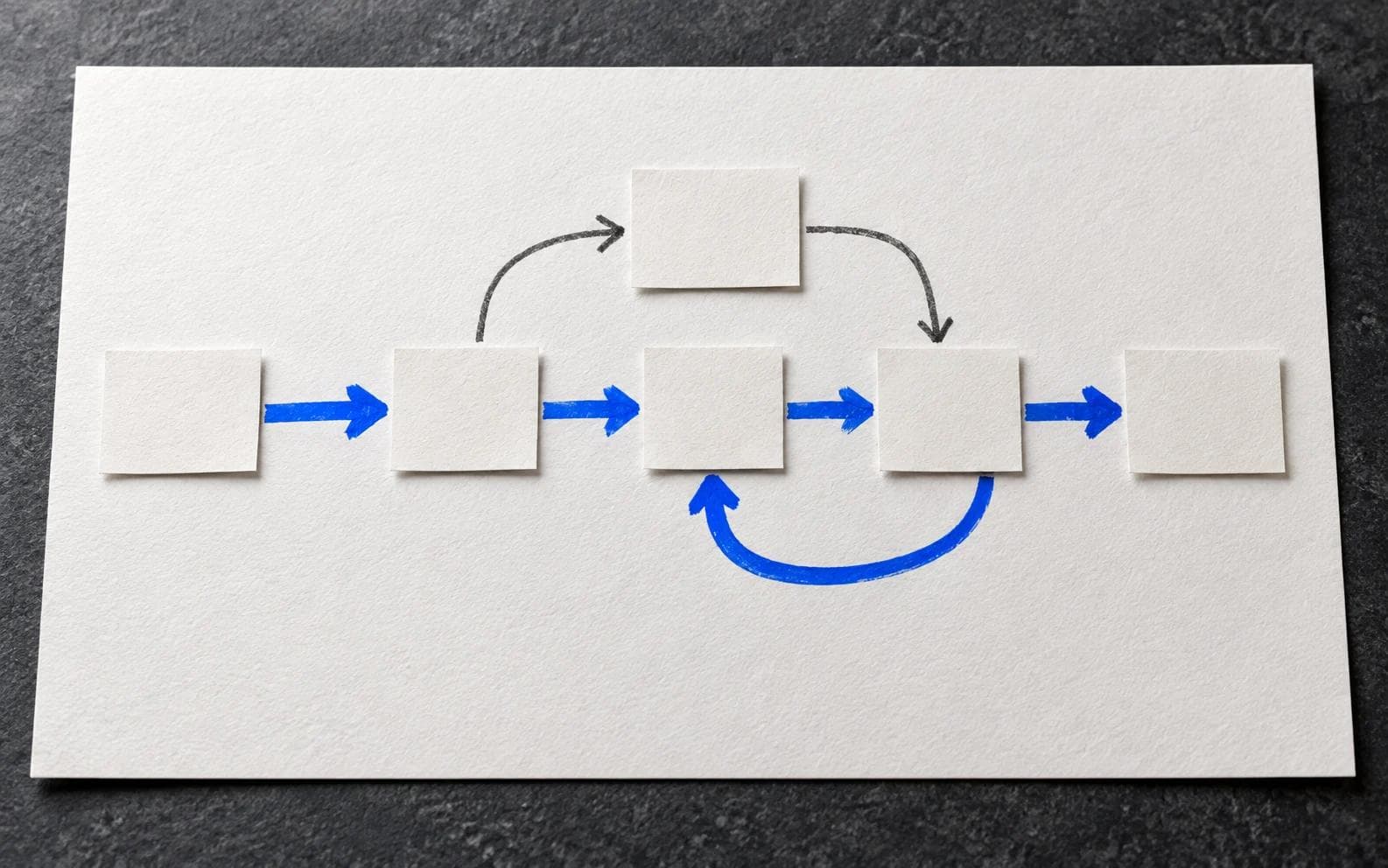
Record each step, its owner, the information it needs and its output. Include waiting, checking and chasing. A task that takes two minutes may sit in a queue for two days. Those are different problems and need different responses.
Separate symptoms from causes
Suppose a hypothetical service business keeps chasing missing details before preparing a quote. Faster reminders might help. But the better first change could be an enquiry form that collects the right details, explains what is needed and names the person responsible for checking them.
This is a working hypothesis, not a guaranteed saving. Try it on a small set of enquiries and measure whether the missing-information rate falls. If it does, you have evidence for the next change. If it does not, investigate the reason before adding another layer.
Decide what a better result means
Write the outcome in a sentence: fewer incomplete requests, a shorter wait for approval or less information entered twice. Set a baseline before changing anything. Avoid treating the number of automations created as the outcome.
Microsoft's process-mining documentation describes using process maps to identify bottlenecks and inefficiencies. You can begin the same investigation with a conversation and a simple sketch; a specialist product is an option when the volume and available event data justify it.
Make one change you can evaluate
Choose a small, reversible change with an owner. Removing a redundant approval, clarifying a handoff or agreeing one place for the current status may be more useful than a new application. Then revisit the workflow with the people using it.
If you need a practical next step, map one workflow. Once it is visible, decide whether to automate, replace or leave it alone. The aim is a business that works better, with technology serving a clear purpose.